
As we approached our large country house in Brittany after two days, in early November. We had driven a good 1,000 km in a violent storm with a camper trailer and suddenly couldn’t take the usual route into the forest where the house is located. The road was now blocked due to the hurricane that had ravaged the area in the days prior
We hadn't heard much about this, but we had experienced severe weather throughout our entire trip up the French west coast. So when we had to take a different route to our house in the dark, we saw hundreds of fallen trees, and when my husband unlocked the house, there was no electricity either. It was nine o’clock in the evening, and we just had to wait until Sunday morning before a neighbor drove by and told us that the entire area was without power—not just our house. So yeah, it was a less-than-fun start for us. Unfortunately, the power didn’t come back to our little hamlet until 12 days later. We ended up going 8 days without electricity.
I thought we were very lucky because we had our camper with us. We bought the camper, which is from 1972, for €100 in the fall of 2022 and then spent four months completely renovating it. We often live in our camper for several months at a time, and that’s only possible because we’ve built a large kitchen and have an autonomous electrical system powered by solar energy.
Unfortunately, there isn’t much sun from October to April in Brittany, so I quickly realized that we couldn’t cook the way we used to during this blackout, even though we had a fairly self-sufficient electrical system. So, what did we do?
In any case, I quickly figured out what was most important in a situation like that, what had been most helpful to us, and what was less useful.
The most important things in such a situation are the following: having heat, being able to store food properly so it doesn’t spoil, being able to provide usable light, being able to cook easily, heat water, and, yes, maintain a reasonable level of hygiene (washing dishes, bathing, washing clothes, cleaning).
Secondarily, it may be important to be able to work (i.e., charge your devices, use your laptop, and have internet access, etc.)
Let me just say that there were many things we couldn’t do during this period. But there were also many things we could do—and that was all thanks to our car and an electric generator that we’ve had for the past two years. It has saved us many times when there wasn’t enough sun to charge our system in the RV, and I think most people would benefit from having one. It can be charged via solar panels, via DC in the car while driving, and directly from an AC outlet. They come in many models and price ranges; the one we have can power devices using less than 500W, and it’s worked great for us. But a larger unit wouldn’t be a bad idea—or even two of these, since you might not always be together. Unfortunately, they’re expensive, so they’re not something most people would prioritize.
So, from November 4 to November 11, we only had electricity through this box. That meant my husband could work (he works online, and he had enough electricity to charge his laptop and three cell phones—one of which serves as a modem), the second as a code generator, and the third simply as a phone for making calls and general use). Thanks to that, he didn’t lose his job—which is certainly important to most people. So the power generator box came to our rescue once again.
Several of you have asked what I found helpful during this time, as well as what I felt was missing and what I considered most important. I’ll discuss this a bit in the guide below, which I’ve divided into two posts. Here, I’ll offer some advice on what I think are good preparations to have in place for a potential future power outage. I wish I’d had these things—it would have made things a little easier for us, and it would have been less stressful for all of us. It’s really not fun to be without electricity and hot water for many days. It disrupts your daily routines and makes you less active and less alert. So yeah, being prepared probably isn’t the worst idea—it’s about more than just being able to generate your own electricity.
I've divided this guide into the following topics:
Part 1 Heating / Food Storage / Cooking
Part 2: Lighting / Hygiene / Electricity
HEAT
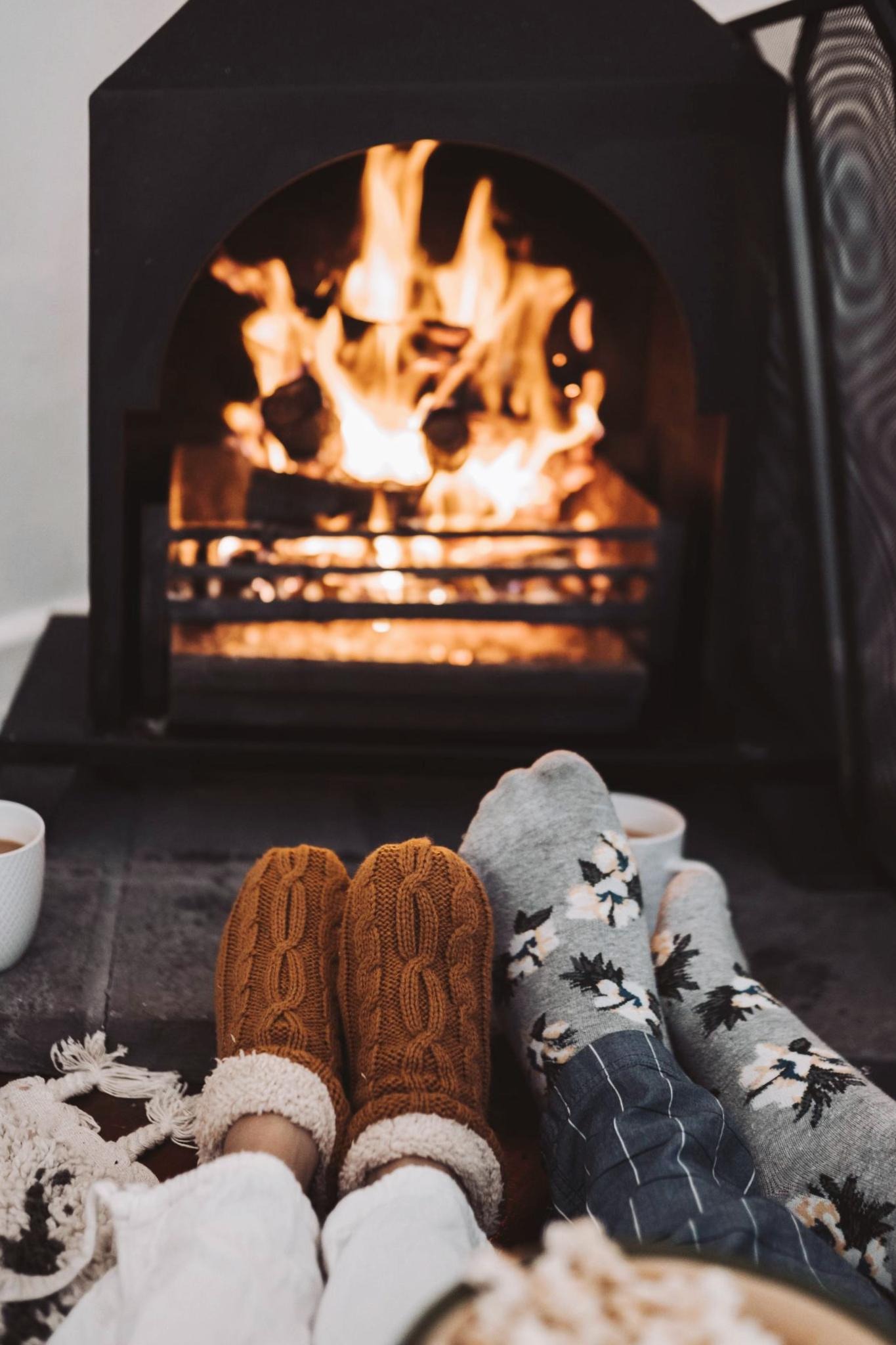
We stayed warm simply by keeping only a small part of the house open. In other words, we limited our living space to our bedroom and bathroom. So we didn’t heat more than one room; our bathroom doesn’t have its own heat source, so the temperature there was around 10 degrees Celsius the entire time. We heated the bedroom with our fireplace, and if you don’t have one in your bedroom, I would definitely say it’s a good idea to have one or two other heat sources. For example, if you’ve switched to a heat pump or rely on government-provided heat—which depends on electricity to function—you won’t be able to use it, so it might be a good idea to have at least two other types of heat sources available. Something else I also found useful was having a couple of extra curtains on hand and some extra throws. I hung the curtains in front of doors where there were drafts and rolled up the throw, placing it like a sausage at the bottom of the door. This made the room 5 degrees warmer without using any more fuel. In general, it’s just a good idea to have a few extra textiles—like curtains, throws, and wool slippers—on hand in a situation like this. That’s how people always used to do it.
I would recommend getting some of the following items:
Gas Heater (Preferably one with an A rating so it uses the least amount of gas; the one we have runs for over 188 hours on 13 kg of gas and has wheels, which is very handy because you can move the heater easily. When using a gas heater, it’s important not to let it run constantly, as that makes the room damp—and, well, it’s unnecessary since the temperature rises quickly. So we run it for an hour and wait a couple of hours before turning it on again.) This is the type of heater I’m talking about Post!
Bio fireplace (Preferably a portable model so it can be moved around; there are several of these that look like wood-burning stoves and can heat rooms up to 40 m2) Like this type Post!
Extra gas cylinders and a one-month supply of bioethanol (1 liter burns for about 3–6 hours, depending on the type of stove you have)
Tealight stove: If you light a lot of candles, you’ll also get heat. Unfortunately, heat rises and therefore ends up at the ceiling. That’s totally fine if you live in a place with low ceilings, like in old farmhouses, or if you live in a loft, but otherwise it’s pretty lousy. That’s also why people used to have fireplaces built into the wall—because they heated the walls and the stone around them, thereby retaining the heat. The same is true of a tiled stove, a cast-iron wood-burning stove, or a wood-burning range. But if you don’t have firewood and it’s cold, you can use a tea light heater in smaller rooms. It’s heated by 6–10 tea lights, which warm the container they’re placed in. So instead of putting them in tea light holders, you can place the candles individually inside a a pot warmer like this one or a an iron heater like this one. If you're lucky, you can also find old cast-iron heaters. These were used to warm the space under beds, to keep small rooms cozy, and to keep food warm. Tea-light stoves work just like traditional heat sources. They trap some of the heat before it rises, so it dissipates more slowly. This is because the heat is temporarily trapped in the material that absorbs it. You can’t heat large rooms with a tea-light stove, but small rooms of 4–6 m² can be kept cozy for a longer time. They can also be used to warm your hands, and they’re cozy because they provide a soft glow, so I definitely think it’s a good idea to have one. If you have a cast-iron one, you can also use a canister burner or charcoal in it, and then it can actually heat the room up really well.
Make sure you have plenty of matches, lighters, and, yes, tea lights. "Plenty" doesn't mean 2 packages, but rather 20 packages and 10 lighters.
Oil/alcohol-fueled tin can burners—they look like a can of tuna, but yes, they keep you warmer for much longer, although you could also burn a can of oil-packed tuna; I imagine the smell, however, would be less pleasant.
It’s also not a bad idea to keep a few bags of coal on hand; if you have a wood-burning stove, most stoves can actually heat the house with coal.
1–2 sets of cotton/wool curtains
3–4 extra wool blankets
Wool slippers for the whole family.
FOOD STORAGE
Storing food is relatively difficult unless it’s cool enough outside—in which case, most people can just leave their food safely outside. Unfortunately, that wasn’t the case for us, so what saved us was that we had a refrigerator that could run on gas and DC electricity from the car. Of course, a car/camping refrigerator like that is convenient but also expensive. If you have a yard, it’s smarter to dig a ground-cooled storage box; you can use it all year round, and in emergencies, it’s downright brilliant since it doesn’t use any energy at all. Otherwise, preserved foods and pickles are always easy to store and don’t require refrigeration, so having a small supply of those is a really good idea. I always keep a stock of staple foods so I can prepare simple meals (which is relatively important in this type of situation, since you have to be careful about how much gas you use, etc.).
So yes, when it comes to food storage, I would at least consider some of the following:
Car Cooler (They can stay cold overnight if you’ve left it running during the afternoon, even in warmer temperatures) It was about 12–15 degrees here, and our Dometic refrigerator stayed at around 5–8 degrees the entire time, even without electricity for most of the day. Just remember to take the refrigerator out of the car—otherwise, you won’t be able to start the car the next day! We use this one refrigerator!
Build Your Own Earth Refrigerator (If you have a yard and can therefore bury a large cooler deep in the ground, it will stay perfectly cold and you can use it year-round—it’s the modern version of a ground cooler.) I’ll show you how to do this in a later post.
Keep a good supply of preserved, pickled, fermented, and vacuum-packed grain products (By this I mean preserved meat dishes in jars, broth in jars, soups in jars, tomato passata in jars, plenty of rendered fat in jars, pickled beets, pickled cucumbers, fermented carrots, sauerkraut, and jams. You should also have flour, whole grains, rice, etc., preferably vacuum-sealed, so they aren’t infested with mites. It’s also a good idea to have some freeze-dried sourdough starter or dry yeast, especially if you have a pellet oven or gas grill, since you’ll then be able to bake bread, pizza, and more. The most important thing is that you can easily prepare nutritious meals without too much hassle, because that can be relatively difficult in a situation like this, where your induction cooktop and oven suddenly stop working and the supermarket is closed due to a blackout—it’s pretty lousy to be left completely without any food at all.)
COOKING
The hardest part was actually cooking; luckily, we have a car and were able to drive the 20 km or so into a larger town to shop. All the supermarkets, bakeries, and grocery stores in the area were closed because of the blackout. So you could easily have been stuck there, starving, for 12 days. Just think about that!
Luckily, I had a small food stash, and I've had one for the past few years because I've come to realize that it's actually a very smart idea to have a food stash. As you know, ALWAYS used to have. I simply couldn’t bring myself to be a good mother if I were to watch my children go hungry because we suddenly ran out of food—all because I hadn’t thought things through. So that’s what I’m doing now, and I’ll describe how I maintain my pantry and keep it stocked in another post.
Although we were lucky enough to have a two-burner gas stove, so we could do some simple cooking, we also had a gas grill, which allowed us to grill food, bake pizza, and so on. But what very few people think about is how difficult it is to prepare a proper meal when there’s no hot water coming out of the tap. Which is only available if your water heater runs on gas. Ours doesn’t, so all the water in the house was between 2 and 5 degrees Celsius, meaning all the water for washing dishes had to be boiled in a saucepan and then mixed with cold water. That really limits how elaborate your cooking can be—you can be sure of that. Which means that preserved foods, pickles, and long-lasting breads (like crispbread, etc.) can be a huge lifesaver in a situation like that. Personally, I would have liked to have had more preserved food in jars, and I’ll work on that going forward. Our meals consisted mainly of lasagna, pizza, sandwiches, and confit duck legs (which wasn’t easy, used way too much gas, and created a huge pile of dishes), so the most important thing is to have food that can be easily reheated and uses as little energy as possible—you never know how long it will take before you have electricity again or whether gas will be easy to come by.
Things that might be useful to have:
Gas burner (preferably with two burners) We use a camping stove that runs on micro gas canisters; they don't take up much space and last a long time. We use this one type!
A pellet pizza oven or gas grill (If you have a tabletop pizza oven or a gas grill, you can bake pizza and bread, so it's very useful)
Extra gas cylinders (If you have a stove that uses small bottles, it's easier to store them if you don't have much space) and extra bags of pellets if you have a pellet-fired pizza oven.
An old-fashioned kettle It makes it much easier to boil water for washing dishes and such. Believe me, you get tired of using a saucepan.
That was Part 1 of this post, and I’ll be sharing Part 2 soon. I hope this helps those of you who have been asking for it. Feel free to ask questions in the comments section if there’s anything else you’d like to know.
Have a blessed day!
Love

P.S. All posts on this blog are written and photographed by Belle Frost; no AI was used to generate content, and all copyright belongs to Maison Frost.





Hi, Belle.
What kinds of preserved meat dishes and soups in jars did you have? Store-bought or homemade? And broth in jars, too? That sounds so clever ???? Can you preserve soup and meat dishes yourself? Doesn't that require a pressure cooker and a lot of equipment?
Dear Benedicte,
You can preserve most things, including meat dishes, broths, and soups. I’ll be sharing a lot more about that. You don’t need any special equipment—just a large pot, sturdy jars and glass bottles, and recipes for dishes that work well with this technique. Preserving dates back to 1808–1811, when the Frenchman Nicolas Appert invented the technique and saved the entire French fleet from scurvy. Yes, believe it or not, it’s a French technique, and you can preserve a wide variety of foods. As I promised you, I’ll be sharing much more about it, as well as how to build and maintain a pantry, so I’ll be responding to your comment regularly, my dear friend 🙂 K.H. Belle
Thanks for sharing the details, Belle! I love your down-to-earth approach and your very specific recommendations for products and experiences.
Questions about heat sources:
I’m considering the two options: a gas stove and bioethanol. As you know, Denmark is in the process of rolling out regulatory measures, and I’m wondering which of the two sources mentioned will be restricted or disappear entirely first. This is just speculation, of course, but do you have any thoughts on this?
Of course, it's best to have multiple sources to minimize my risk, but if you had to choose just one...
Food Storage:
So I’ve bought my own equipment and have slowly started pressure canning. However, I’m a bit limited on shelf space when it comes to keeping things dark, dry, and at a constant temperature. That’s why I’m also very interested in your upcoming post on exactly how I can build a storage box in my small garden 🙂
I also vacuum-seal dry goods, including vegetables that I’ve dehydrated. However, I’ve noticed that most of the rice, flour, and similar items I’ve vacuum-sealed lose the vacuum quickly. I haven’t been able to figure out why. Any ideas?
And electricity is something I've given a lot of thought to. So I'm looking forward to the next part.
Kh. Charlotte
Dear Charlotte,
Thank you for your very thorough comment 🙂 “I love it!”
When it comes to gas stoves and bioethanol, you could say that bioethanol has the advantage of not emitting CO2, which is, of course, the main culprit according to “you know who” :-D. So you could say it’ll probably never be phased out or regulated, unlike gas, which they’ll definitely try to do—which is a real shame. Gas heats up quickly, but it also raises the humidity. However, I think it’s smart to have gas, since you can store it relatively safely in bottles and thus build up a supply as long as possible (after all, they can’t regulate what you already have). Bioethanol can be bought in 20-liter containers, but they’re made of plastic and, yes, insanely flammable. On the other hand, you can make your own bioethanol (even though it’s illegal), but in an emergency, those kinds of formalities might become less important. If you have to choose between the two, the biofireplace is certainly space-saving, and yes, they can be mounted on walls in multiple rooms and provide good heat—but as with gas, the heat also dissipates easily. Still, it works in an emergency. Just like the tea-light stove, which is also a great option—I just wrote a bit about it when I updated the post. Sounds exciting that you’ve started canning—it really is an art! As for vacuum sealing, sometimes air can get into the bags, and that’s usually because the sealing mechanism on the machine isn’t tight enough. This creates microscopic air pockets in the seal, and over the weeks, air seeps in, leaving you with a saggy bag. It could also be because the bag has a small hole somewhere else, or if certain insects try to make holes in the bags—that can happen, too. But in 99% of the cases, it’s because the bag hasn’t been sealed properly—and this is usually because the mechanism isn’t completely clean, the bag is positioned incorrectly, or there’s a malfunction with the machine. I’ll be sure to write part two over the next few weeks, but the underground refrigerator won’t be covered until we return to Brittany. K.H. Belle