
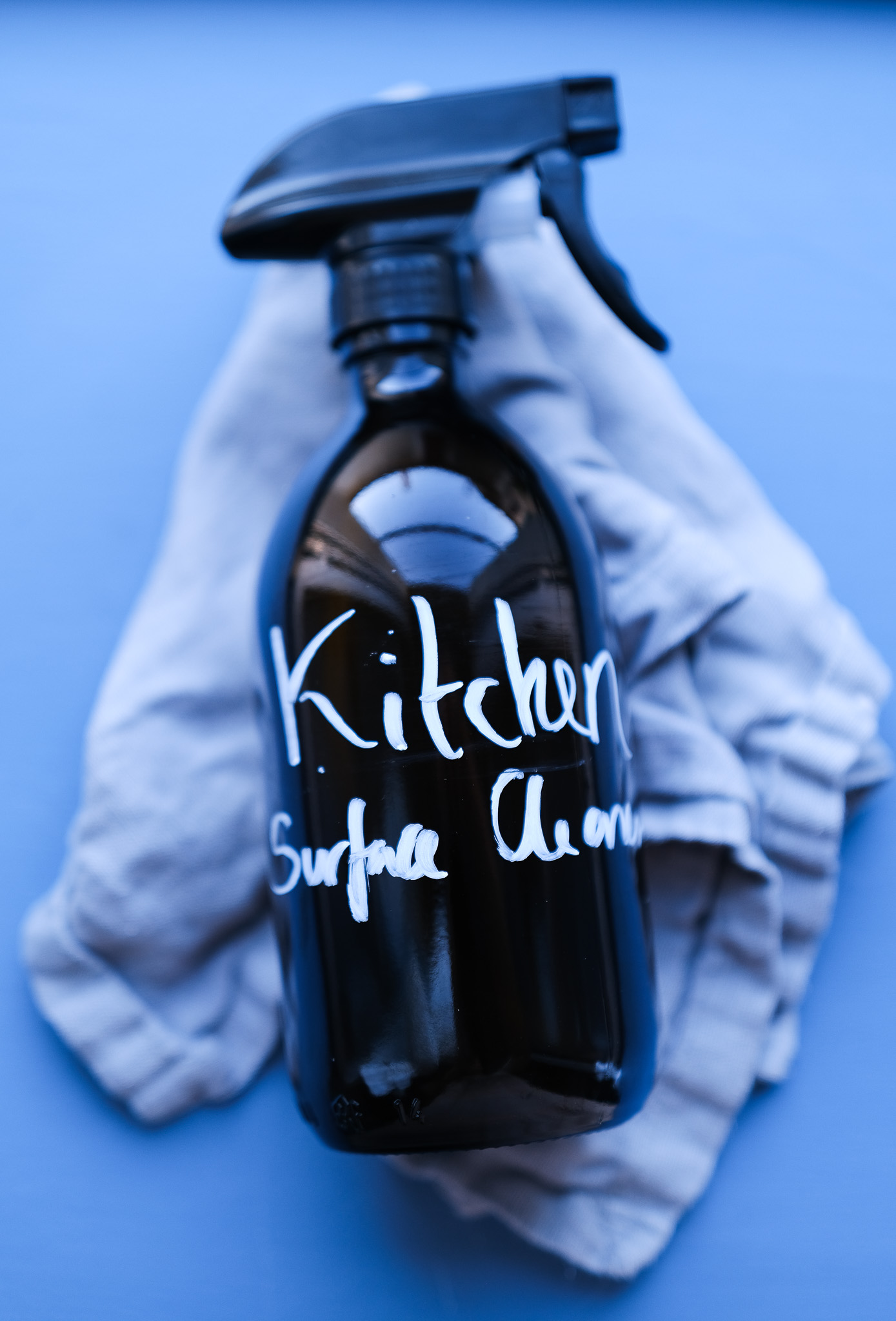
When we were in the U.S. for the second time, I found a wonderful surface spray for the kitchen at a Sprouts supermarket. It smelled absolutely wonderful—like citrus. In fact, it smelled so much like citrus that it triggered a scent memory I had from when I visited the first Søstrene Grene store on Søndergade in Aarhus. I was pretty young back then—under 5 years old—and we lived in Højbjerg. I clearly remember a Saturday trip to Strøget in Aarhus, where I could smell something wonderful coming from the store right next to Salling. When I went inside, I found a bar of hand soap. That was where the scent was coming from. It had such an intense citrus scent that I bought it with my allowance. Can you believe it!
Does this sound familiar? How a scent or a taste can make you remember something you’d completely forgotten? It was so strange to experience that sensation, just because I’d bought an overpriced kitchen spray at a supermarket on the other side of the world.
The product, which was very expensive, was what I’d call one of the purest you can find on the market. However, there were a few ingredients (mainly unnecessary foaming agents and preservatives) that I’d rather do without when I’m cleaning. I usually don’t wear gloves when I’m just walking around wiping down surfaces (even though I should), but that’s exactly why I want the mildest formula possible—and you rarely find that in stores.
I actually became a bit addicted to that kitchen spray, so I ordered it while we were in Canada, even though it was super expensive. But since we’ve been back in France, I haven’t been able to find that Australian brand for sale here in Europe. So, naturally, I decided to make my own surface spray that both disinfects and cleans surfaces while evoking the same scent memories as the one from Sprouts.
It’s a simple formula that I’ve actually come to really like, and luckily, it also smells just the way I want it to. The secret behind this lovely scent is lemon myrtle—an herb with a truly wonderful citrus scent. A scent that not only fills the room with joy but also has some pretty effective cleaning properties.
Lemon myrtle oil is, in fact, a superior natural cleaning agent in its own right. This is because the oil contains 90-98% citral—the highest concentration of citral found in nature. Citral has a very potent antibacterial effect; it is antifungal and has antimicrobial properties. Lemon myrtle is 30% more effective than tea tree oil and can, among other things, kill harmful microorganisms such as Staphylococcus aureus. This makes it a powerful wonder ingredient to add to cleaning products, disinfectants, for surfaces, laundry, and air purification.
The scent, however, is a whole different story—if you love lemon, I think you’ll absolutely adore lemon myrtle. Haha, God must have been having a really good day when he created this herb. The scent is stronger and longer-lasting than that of citrus fruits. It naturally deodorizes rooms and has an uplifting and stress-relieving effect.
Another key benefit of lemon myrtle is that it is not phototoxic, unlike lemon, bergamot, and other similar oils; in other words, it does not irritate the skin. On the contrary, it is gentle on the skin and helps maintain the pH balance during cleansing, which reduces the risk of irritation.
Lemon myrtle is also biodegradable and a thoroughly sustainable alternative to toxic cleaning products. It effectively removes grease and stains and eliminates dust mites. All in all, it’s a great oil to use in everything from all-purpose cleaners, sprays, laundry detergents, and hand soaps. The scent is really just a wonderful bonus.
It won't take much more than 10 minutes of your time to make a kitchen spray that you'll probably really like, so let's get started!
Kitchen Spray with Lemon Myrtle & Mandarin
Equipment
- 1 1 LA Pyrex pitcher or similar glass pitcher.
- 1 Small bowl
- 1 Whisk(I use a milk frother with a whisk attachment)
- 1 Kitchen Scale(It is important that the scale can measure weights down to 1 gram with precision.)
- 1 Spray Bottle(I use a 500-ml brown glass bottle)
- 1 package of pH strips
Ingredients
Aqueous phase:
- 360 g Demineralized Water
- 40 g Cleaning alcohol (I use a 95%)
Oil phase:
- 45 g Decyl glucoside (I use one made from sugarcane)
- 35 g Coconut glucoside
- 1,5 g Lemon Myrtle Oil
- 2 g May Chang
- 3,5 g Sweet Orange Oil
pH regulation:
- Apple cider vinegar (Adjust with vinegar until the pH reaches 7)
Instructions
- Prepare the water phase by mixing water and alcohol together in a pitcher.
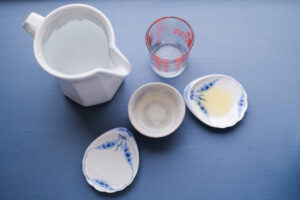
- Next, prepare the oil phase by mixing decyl glucoside, coconut glucoside, and the essential oils in a small bowl.
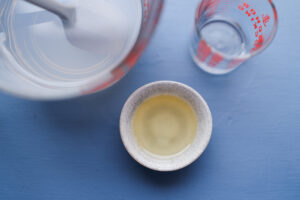
- Gently stir the essential oils into the glucosides until they are completely blended.
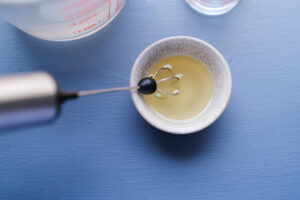
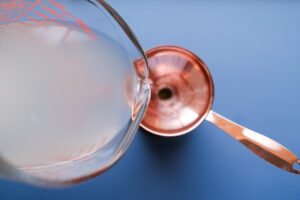
- Pour the oil phase into the water phase and gently whisk them together.
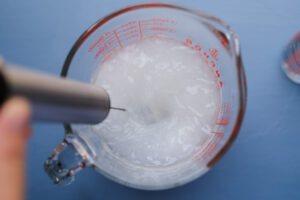
- Test the pH level with a test strip or meter; as you can see, I had to lower it even further to reach 7.
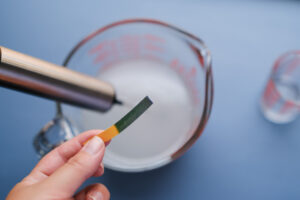
- Adjust the pH by adding a little vinegar at a time; I usually use a pipette for this. I use half a pipette of vinegar at a time and test the pH until it reaches 7. I often use between 10 and 12 grams before it reaches 7.
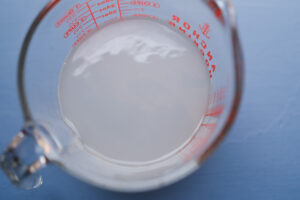
- Pour the finished cleaning solution into a brown glass bottle with a spray nozzle. Now you can clean surfaces in the kitchen in no time. The spray produces minimal foam, which helps speed up the cleaning process.
Notes
If, like me, you like to know exactly what’s in the products you use to clean the surfaces in your home, then I hope you’ll try making this easy kitchen spray and see if it’s right for you. If you have any comments or questions, just write them below or send me a message on Signal.
Have a blessed day!
Love

P.S. All posts on this blog are written and photographed by Belle Frost, no AI is used to generate content. Generate content; all copyrights belong to Maison Frost.





Leave a Reply